
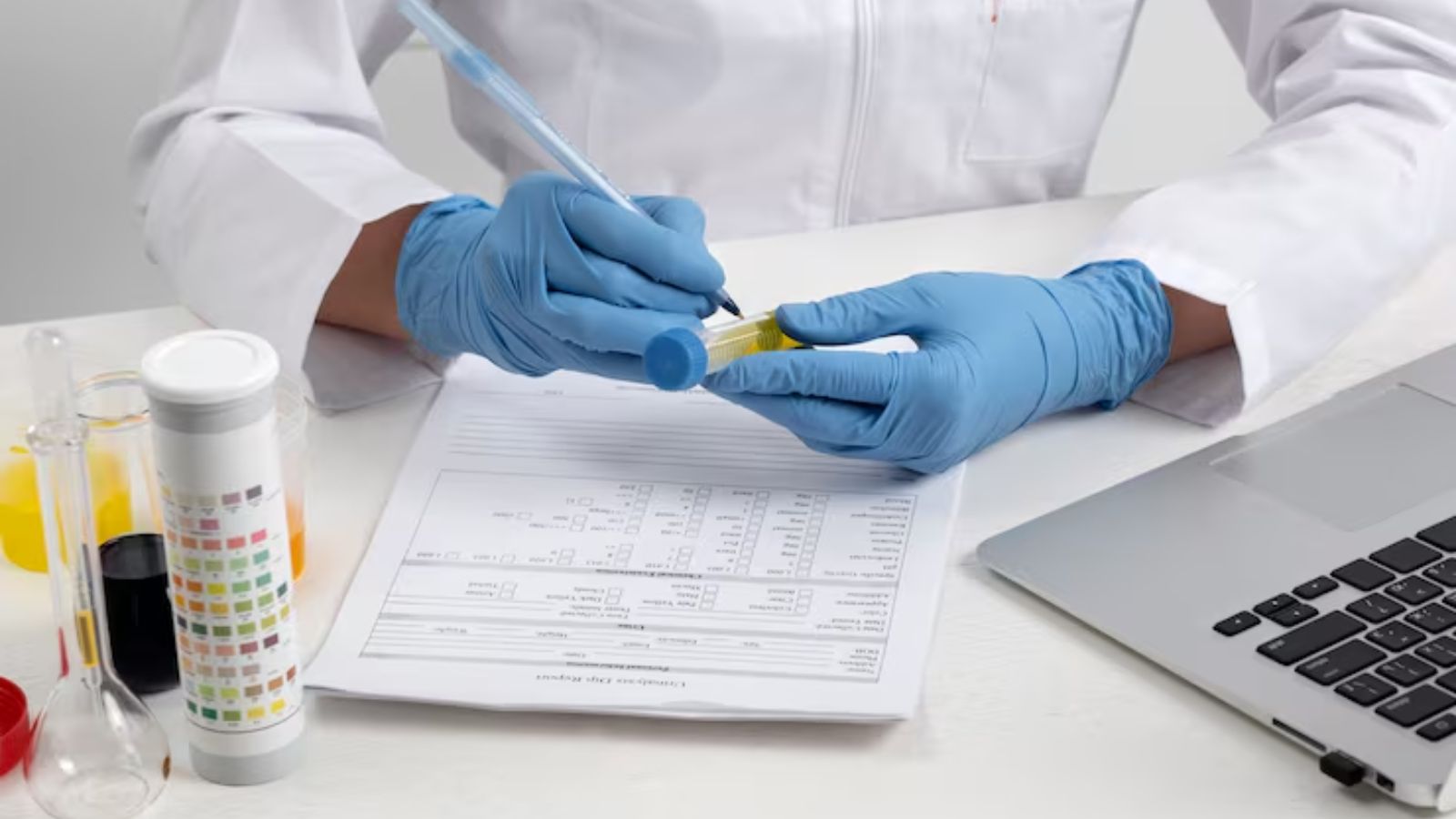
How to Dispute a False Positive DOT Drug Test Result
Imagine driving on I-90, passing the sparkling Cloud Gate at Millennium Park, and being very happy about your career. Then, you receive a call. Your recent drug test has been reported as non-negative. Your heart drops. You believe you haven’t touched the banned substance. Still, you might be facing a career-ending decision. At SAP Solutions, we encounter such situations far more frequently than one would think. A false positive DOT drug test is indeed very scary, and it may feel like the end of your career, but it is definitely not.
If you are a professional driver, a pilot, or a public transit operator, you need a clean record to maintain your job. But the system isn’t foolproof. Sometimes science gets a little muddled, and errors do occur in the lab. This handbook will help you prove your innocence. It also guides you through complex government rules.
The Reality of False Positives in DOT Testing
DOT-mandated tests are very important, but even then, they can still be affected by “cross-reactivity”. This refers to when a legal drug, like a cold medicine or some foods, can mimic the structure of an illegal drug during the first sample screening.
According to data from the FMCSA Drug and Alcohol Clearinghouse, positive drug tests accounted for about 81% of all reported violations from late 2024 to 2025. Although the majority of these are genuine positives, a tiny fraction of drivers are “false positive” victims. Studies in medical journals show that some drugs, like amphetamines, can have high “false positive” rates in initial tests. This happens before confirmatory testing verifies the results.
Common Culprits Behind the Confusion
What can turn the red flag on you may even surprise you. Here is a list of some common things that could mess up your results:
- OTC Meds: Many decongestants, like Sudafed (pseudoephedrine), often have structural analogs of amphetamines.
- Antidepressants: Some antidepressants, like Wellbutrin (bupropion) and Zoloft (sertraline), can sometimes cause issues.
- Pain Relief: High doses of ibuprofen (Advil/Motrin) or naproxen can sometimes cause a positive test for THC or barbiturates at the initial immunoassay stage, but this is rare.
- Dietary Choices: The “poppy seed bagel” excuse has some science behind it. Poppy seeds from Papaver somniferum contain tiny amounts of morphine and codeine.
Step 1: The MRO Interview, Your First Line of Defense
When a laboratory finds a positive result, it is not sent directly to your employer. First, it is sent to a Medical Review Officer (MRO). An MRO is a licensed doctor who serves as the independent “gatekeeper” ensuring the integrity of the DOT testing program.
This is your most critical window. The MRO will phone you and have a verification interview with you. This interview is your opportunity to give a “valid medical reason” for the result.
- Be Transparent: If you have a valid prescription, for instance, it would help if you got the pharmacy name and the doctor’s contact details ready.
- Check Your Records: Are you on any new supplements? Maybe you visited an urgent care recently?
- Stay Professional: Keep your composure. An MRO is a Medical Review Officer, whose role is to authenticate facts, not to be a judge of your character.
If the MRO decides that your prescription is the reason for the finding, they will communicate the test result as Negative to your employer. No harm, no foul.
Step 2: The DOT Drug Test Appeal Process, Requesting the “Split”
If the MRO rejects your reasoning, the final result shows “Positive.” At this point, the DOT drug test appeal process gets underway officially. According to 49 CFR Part 40, you are entitled to a legal right: the Split Specimen Test.
While giving your sample, the collector divided it into two bottles: Bottle A (Primary) and Bottle B (Split).
Your window is strictly 72 hours after the MRO informs you of a confirmed positive result to ask for testing of Bottle B.
How the Split Test Works
- Other Lab: Bottle B should be forwarded to a separate lab certified by the HHS other than the first one.
- Purpose: The secondary lab checks only the drug in Bottle A. If they can’t confirm the drug’s presence, the testing stops. You won’t be marked with a positive drug test.
- Cost: It is possible that your employer will make you pay for the split specimen test in advance; however, some company policies are different.
Step 3: Understanding the Return-to-Duty Journey
If the second test shows drugs, or if you miss the 72-hour deadline, the FMCSA Clearinghouse will place you in “Prohibited Status.” The rules became even tougher in late 2024: not only FMCSA, but states also have to lower your CDL level if you are in a prohibited status.
In order to resume driving a vehicle, you are required to go through the DOT return-to-duty procedure. This isn’t the “punishment” part. It’s a safety check to see if you’re fit, both physically and mentally, for the duties. This is the moment where we can help. With SAP Solutions, it will be like our experts will be with you every step of the way.
The FMCSA SAP Program Phases
- Initial Evaluation: You have a session with a certified Substance Abuse Professional (SAP).
- Treatment/Education Plan: The SAP outlines a personalized problem for you, which could range from a single class to a more in-depth program.
- Follow-up Evaluation: The SAP evaluates your recovery after you finish the plan.
- Return-to-Duty Test: You do a drug test under supervision. If you test negative, your “prohibited” status is removed.
- Follow-up Testing: You are likely to have several unannounced tests during this period.
| Step | Action Item | Who is Involved? |
| 1 | MRO Verification Interview | You & The MRO |
| 2 | Request Split Specimen (Within 72 hrs) | You & The MRO |
| 3 | Register in FMCSA Clearinghouse | You |
| 4 | Select an SAP (like SAP Solutions) | You & SAP Solutions |
| 5 | Complete Education/Treatment | You & Provider |
| 6 | Return-to-Duty Drug Screen | You & Employer |
Technical Glitches and Procedural Errors
Occasionally, the problem is not what you have ingested but rather the way in which the testing was completed. Although very few in number, what some people may call “fatal flaws” can result in a test being canceled. Here are a few examples:
- The specimen bottle’s seal was broken.
- The collector did not sign the Custody and Control Form (CCF).
- ID numbers on the bottle and the form do not match.
If you believe there’s been a procedural mistake, you ought to talk it over with your DOT SAP program, maybe even your legal counsel. Take a look at 49 CFR Part 40 to view the complete list of “cancelable” errors.
Strategies for a Successful Dispute
Knowing how to dispute DOT drug test result claims requires more than just saying “I didn’t do it.” You need documentation.
- Gather Receipts: If you purchased an over-the-counter medication at a pharmacy near Navy Pier, locate that receipt.
- List Supplements: Many “natural” energy boosters or gym supplements have hidden ingredients that are drugs.
- Expert Consultation: Don’t do it yourself. The rules are very complicated, and if you make a mistake, there can be a career break for many years.
At SAP Solutions, we think that every hardworking person should get a fair chance. We use our knowledge and skills to help clients succeed in the FMCSA SAP Program while keeping their self-respect. For us, it is not just a “violation number”; it is a person who is trying to help their family.
Final Thoughts: Protecting Your Future
A false positive on a Department of Transportation (DOT) drug test may appear as an insurmountable obstacle at first. However, if you take the proper measures, it is possible to recover. An incorrect test result may be due to either lab error or a misinterpretation of a medication. In either case, the federal regulations offer a procedure for resolving the issues.
Contact SAP Solutions today. Speak with an expert who understands the system. They will guide you through the DOT return-to-duty process easily. Visit our website to discover all our services and how we have been supporting drivers like you.
Frequently Asked Questions
Q: Can I keep driving while I dispute my test result?
Unfortunately, no. Once an MRO confirms that the test is positive, the employer is required to take the employee out of safety-sensitive positions right away. The employee is expected to stay off-duty until the entire return-to-duty procedure has been finalized.
Q: How long does a positive test stay on my record?
Violations in the FMCSA Clearinghouse last for five years. They stay longer if you haven’t completed the return-to-duty process and all follow-up testing.
Q: Does a “dilute” result count as a false positive?
A negative dilute means that the drug test found no drugs, but the sample was too diluted, so it probably shouldn’t be considered a true negative. Nevertheless, an employer may require immediate re-testing. A positive dilution, however, is basically a positive result and will be treated as such.
Q: Can secondhand smoke cause a false positive?
A: It is highly unlikely. DOT testing thresholds are set high. This ensures that casual or secondhand exposure to marijuana smoke won’t cause a positive result.
Related Posts

What Happens If You Fail a DOT Drug Test Twice? 2026 CDL Guide
Failing a DOT drug test even just once is a very serious issue for any CDL...

How to Pass the SAP Follow-Up Testing Process?
The SAP follow-up testing process is a key step for safety-sensitive workers who...

DOT Urine Drug Testing Protocol: Step-by-Step Overview
The DOT urine drug testing protocol is a federally regulated process designed to...

What Happens After a DOT Drug Test Failure? Step-by-Step Timeline?
A DOT drug test failure is a serious matter. It affects work status. It also...